
Parking & Stopping
Where you can park, and where you legally cannot, protects sight lines, emergency access, and other road users.
Parking Basics
There are different types of parking. When leaving a parked or stopped position, check your blind spots and mirrors, and yield to all other traffic.
Parallel Parking
Park in the direction vehicles are moving in the lane. Park parallel to and no more than 12 inches from the curb. If there is no curb, park as close as possible to the edge of the shoulder. If parking areas are marked, your wheels must be within the marked space.
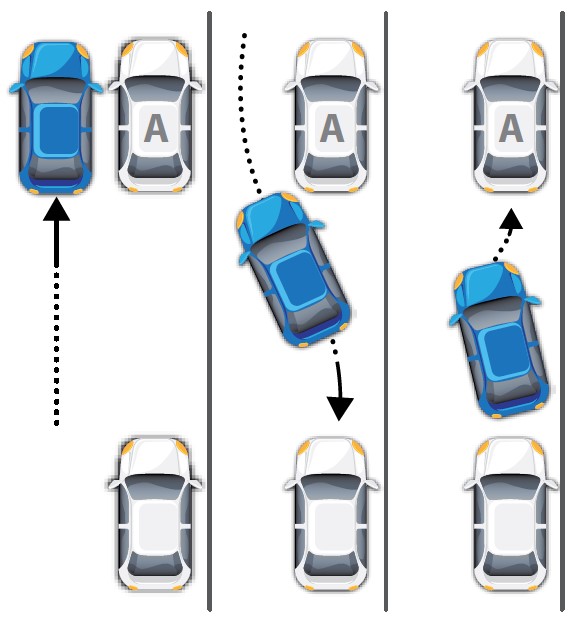
- Pull even with car A.
- Back slowly toward the space and turn your wheels sharply.
- Straighten your wheels.
Angle Parking and Parking on Hills
Angle Parking: Common in parking lots, shopping centers, and on wide streets. When driving large vehicles, avoid parking in spaces that obstruct traffic on the road. Signs may indicate when a parking area is reverse-angle or back-in only.
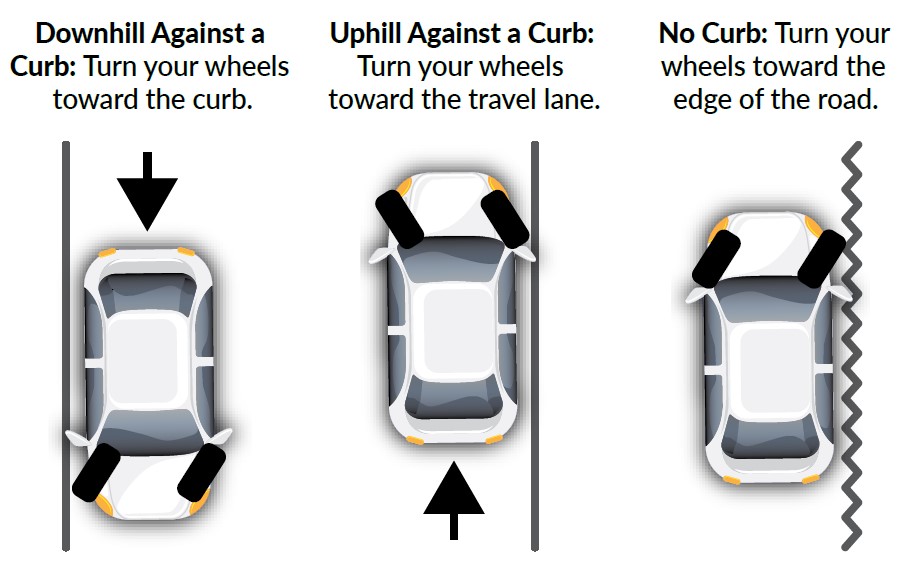
Parking on Hills: Always set your parking brake. Leave your vehicle in gear (manual) or in park (automatic). Turn your front wheels to prevent your vehicle from rolling downhill if the brake fails.
Parking Spaces for Persons with Disabilities
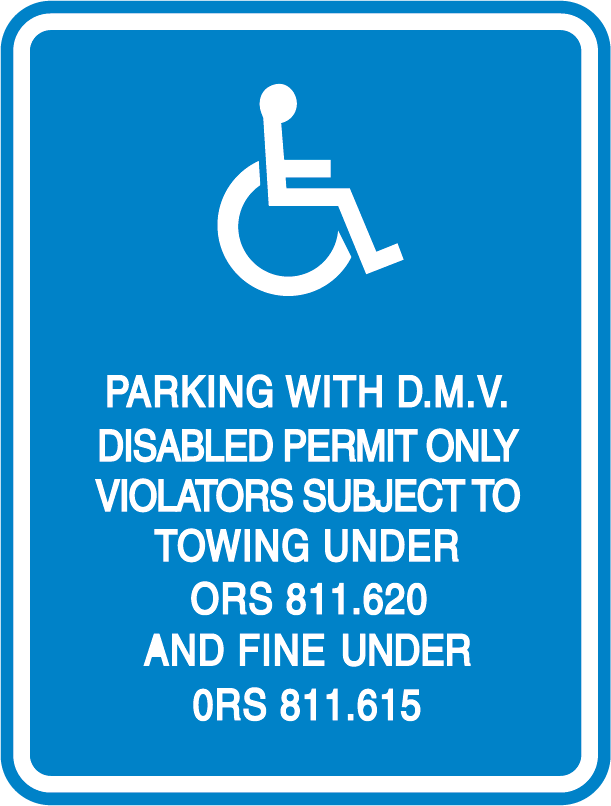
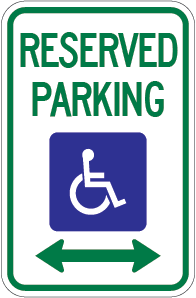
Oregon issues special parking permits to persons with disabilities or groups that transport them. Spaces may have the disabled symbol on the ground as well as a sign at the front of each space.
No Parking
The rules about parking and stopping apply whether you are in your vehicle or not. You cannot stop or park in any of these locations, unless your vehicle breaks down and you cannot get it out of the traffic lane or there isn't enough room on the shoulder:
- In a traffic lane, on a highway, street, or road.
- Within an intersection.
- On the road side of any parked vehicle (double parking).
- On a sidewalk, crosswalk, bicycle lane, or path.
- On any railroad or light rail tracks.
- On a bridge, overpass, or in a tunnel.
- Between separate roads of a divided highway.
- Near construction or road work where it would interfere with traffic.
- Anywhere official signs, traffic control devices, painted diagonal stripes, or other pavement markings prohibit parking.
- In front of a public or private driveway.
- Within 10 feet of a fire hydrant.
- Within 15 feet of a fire station driveway on the same side of the street, or 75 feet on the opposite side.
- Within 20 feet of a marked or unmarked crosswalk at an intersection.
- Within 50 feet of a traffic signal or sign if your vehicle would hide it from view.
- Within 50 feet of the nearest rail of a railroad or light rail crossing.
- Within 7½ feet of railroad or light rail tracks when it interferes with the train.
Emergency Parking
If your vehicle breaks down and you have no choice, you may temporarily stop or park in areas usually not allowed, as long as it does not create a hazard. If you must pull off the road, turn on your hazard lights to warn other drivers.
You may park on the shoulder of a highway if passing traffic has enough room to get by. If your vehicle cannot be seen from 200 feet in each direction, warn approaching traffic with flags, flares, signs, signals, or flaggers placed at least 200 feet from your vehicle in each direction.
If you must leave your vehicle unattended, turn off the engine, remove the key, set the brakes, and turn on your hazard lights.
Parking & Stopping: Knowledge Check
5 questions. Answer them all, then check your answers. You can change your answers and try again as many times as you want.
1. When parallel parking, your vehicle should be no more than how far from the curb?
2. When parking on a hill, you should:
3. Parking in a space marked for persons with disabilities without a valid permit:
4. You may not park within how many feet of a fire hydrant?
5. If your vehicle breaks down and you must leave it unattended on the roadside, you should: