
Avoiding a Collision & Hazardous Conditions
Weather and road conditions change constantly. Knowing how to react, before and during an emergency, can prevent a crash.
Avoiding a Collision
There are three things you can do to avoid or minimize the impact of a collision: stopping quickly, turning quickly, and speeding up.
Stopping quickly: If you have enough distance to stop, apply the brakes. Read your vehicle owner's manual on how to properly use your brakes.
Turning quickly: In most cases, you can turn more quickly than you can stop. Scanning the area ahead helps you identify potential escape routes. If you will not stop in time to avoid a collision, turn away from it.
Speeding up: Sometimes it is best to speed up to avoid a collision, such as when another vehicle is about to hit you from the side or behind and there is room ahead to get out of danger.
Driving Off the Road and Oncoming Traffic
If you drive off the road:
- Don't panic or brake hard. Slow down until you can safely get back on the road.
- Grip the steering wheel firmly and keep your vehicle on a straight course.
- Turn the front wheels just enough to get back on the road. Do not turn sharply, or you might cross into oncoming traffic.
Animals
Animals can be unpredictable. Watch for animal crossing signs and be prepared to brake or slow down as you pass an animal.
If you hit and injure a domestic animal, stop and make a reasonable effort to check injuries. Report the injury to the animal's owner immediately; if you can't locate the owner, report it to local law enforcement.
Stop your vehicle if a person riding or leading an animal raises a hand, or it's obvious the animal is frightened, unless stopping would cause a collision. Do not use your horn or make loud, sudden noises near the animal.
Using Lights
Headlights help other drivers see you at all times of day. They must be turned on from sunset to sunrise, and any time conditions make it difficult to see people or vehicles 1,000 feet ahead.
It is illegal to drive at night or in bad weather with only your parking lights on. A vehicle stopped or parked on a road or shoulder must have parking lights on in limited visibility.
Night Driving, Fog, Dust, and Smoke
Night Driving: Your reaction to hazards is slower at night since you can only see as far as your headlights. Look a little to the right of oncoming lights and watch the road edge or fog line to reduce glare. Check your lights often, and be extra careful passing at dawn or dusk, and watching for bicyclists and pedestrians.
Fog, Dust, and Smoke: Use low beam headlights; high beams reflect back and cause glare. Slow down as visibility decreases, watch for slow or stopped vehicles, and be prepared to pull over. If you do pull off, go as far right as possible and turn on your hazard lights.
Rain
Rain impairs your visibility and increases braking distance. Apply brakes sooner and more gently than usual on wet roads. Even summer showers can create slippery roads when rain mixes with oil and dirt.
Turn on your headlights when your wipers are on, and do not use cruise control in wet conditions. If your tires hydroplane, your ability to steer and stop can be reduced or lost. If you drive through water and your brakes get wet, gently apply them while driving slowly until they respond. Do not drive through flooded areas; high water may cause loss of control or engine stalling.
Snow and Ice
Drive at slower speeds and leave more room between you and the vehicle ahead. Keep windows clear and do not use cruise control. When police or highway officials say driving is very hazardous, stay off the road. If you must drive on snow or ice:
- Gently press the gas pedal; too much power may cause tires to spin.
- Gently press and release the brakes; slamming them will likely cause a skid.
- Get the "feel" of the road away from traffic before you start.
- Make turns at a reduced, steady speed.
- Watch for bridges and shaded areas, which freeze first.
- Apply just enough power going uphill to maintain motion without spinning your wheels.
Skidding, Chains, and Traction Tires
If your vehicle begins to skid: Stay off the brakes until the vehicle slows. Steer in the direction you want to go, and as the vehicle straightens, turn the wheel back the other way to avoid starting a new skid in the opposite direction. Continue correcting left and right until you're back in control.
"Chains" include link chains, cable chains, or other devices designed to increase traction on snow and ice. "Traction tires" are studded or other tires meeting the industry definition for severe snow conditions, marked with a mountain/snowflake emblem.
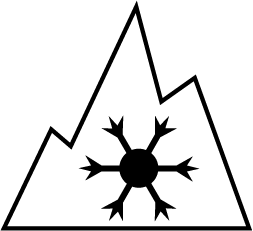
Studded tires are generally allowed only from November 1 through March 31. Because of the road damage they cause, chains or other traction tires are encouraged as alternatives.
Avoiding a Collision & Hazardous Conditions: Knowledge Check
5 questions. Answer them all, then check your answers. You can change your answers and try again as many times as you want.
1. The three ways to avoid or reduce a collision are:
2. If your vehicle drifts off the road, you should:
3. You must dim your high beams when an oncoming vehicle is within:
4. If your vehicle starts to skid, you should:
5. Studded tires are generally allowed in Oregon: