
Passing & No Passing
Passing is one of the most dangerous routine maneuvers in driving. Knowing where it's allowed, and where it isn't, keeps you and others safe.
Passing
Passing another vehicle is a normal part of driving, but can be very dangerous. Give yourself a good view of the road ahead by not following vehicles too closely, especially large trucks and trailers. Know the speed and acceleration ability of your vehicle, and be sure you have enough room to complete the maneuver. If you have to cut back into your lane too soon, you risk sideswiping the vehicle you are passing. If you do not get back into your lane soon enough, you risk a head-on collision. When in doubt, stay in your lane.
When passing on a two-lane road, pass only to the left of the vehicle. Your pass may not begin before the start of a passing zone and must be completed before you enter a no-passing zone. Do not exceed the speed limit when passing.
Check for a clear path ahead. Before you start to pass, check your mirrors and your blind spot by glancing over your shoulder. Turn on your signal, increase your speed, and complete your pass as soon as possible. When you can see the vehicle you passed in your rearview mirror, signal and return to your lane.
No Passing
Signs and pavement markings help you determine where you are allowed to pass. Do not pass in any area where your view of oncoming traffic is limited. Do not cross the center line to pass in these situations:
Solid Yellow Line / No Passing Zone: You are in a no-passing zone. Do not attempt to pass if you cannot safely return to your lane before entering a no-passing zone.
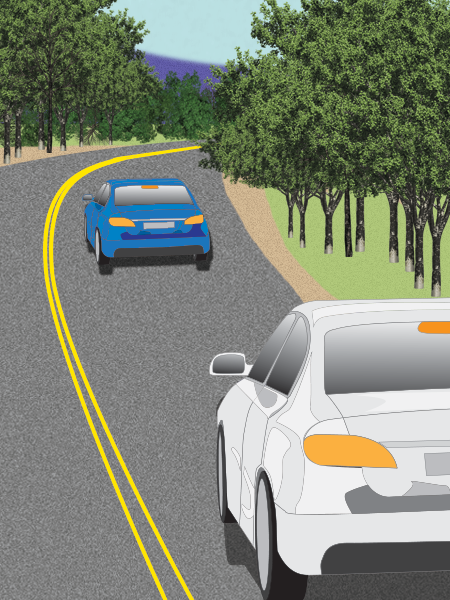
Hills and Curves: Your view of oncoming traffic is blocked because you are on a hill or in a curve.
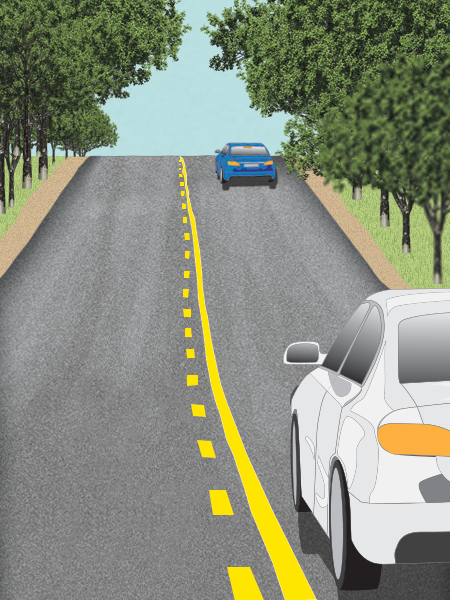
Intersections and Railroads: You are approaching, at, or in an intersection or railroad crossing.
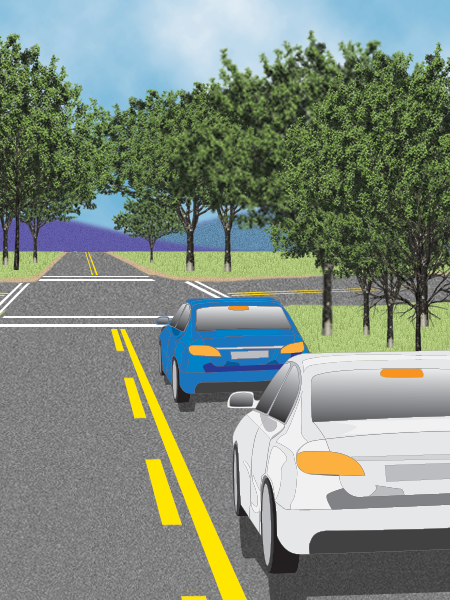
Crosswalks: The vehicle ahead is stopped at a crosswalk to permit a pedestrian to cross.
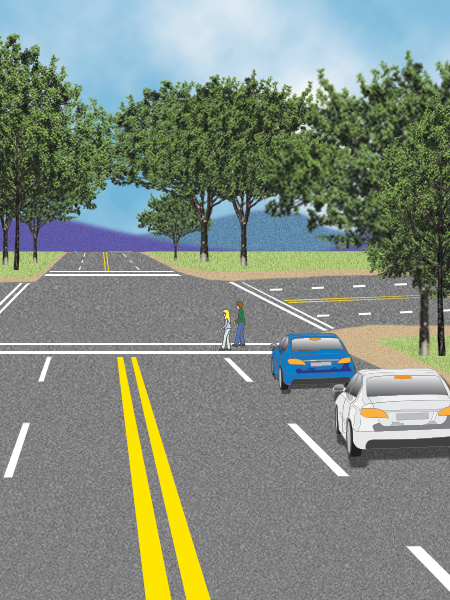
Passing on the Right
You may pass on the right only when:
- The vehicle you are passing is making or has signaled for a left turn, there is sufficient space to the right to pass without leaving the paved road or driving in a bike lane, and the road ahead of that vehicle is clear.
- You are on a road with two or more lanes going the same direction, and the vehicle you are passing is in the left lane. You may pass using the right lane.
Use extra care when passing on the right. Other drivers do not expect it. Do not exceed the speed limit to pass.
Being Passed
When another driver starts to pass you, stay to the right. Help the other driver pass safely by checking oncoming traffic and adjusting your speed to let the vehicle move back into the right lane as soon as possible. Do not use your hands or lights to signal other drivers when to pass. The law prohibits flashing any of your signals at drivers to let them know when to pass.
Passing & No Passing: Knowledge Check
5 questions. Answer them all, then check your answers. You can change your answers and try again as many times as you want.
1. On a two-lane road, you should pass:
2. You may cross the center line in a no-passing zone only if:
3. You may pass on the right when:
4. To let a driver know it's safe to pass you, you should:
5. A dashed white line prior to a passing zone becoming solid yellow tells you: