
Turn Signals, Turns & Intersections
Turning safely means signaling early, positioning your vehicle correctly, and knowing who has the right of way at an intersection.
Turn Signals
Turn signals communicate to other drivers where you intend to go. You must signal before you turn, change lanes, exit a roundabout, or pull away from a curb. Before making such a move, check traffic ahead, behind, and to the side to be sure you can move safely.
If your vehicle is moving in traffic, use your turn signal at least 100 feet before the turn or lane change. When parked at a curb and about to reenter traffic, use a signal long enough to alert traffic that you are moving into the lane.
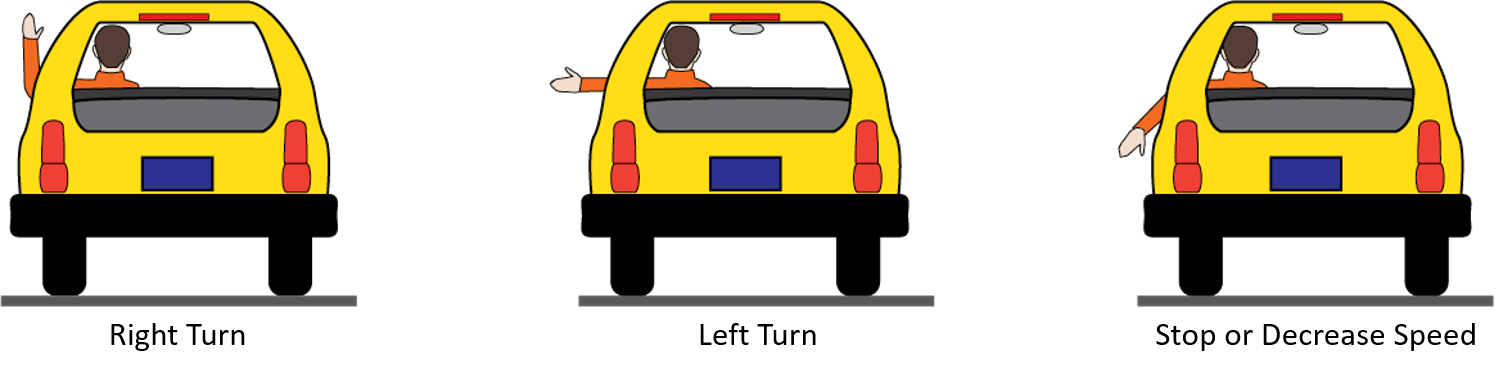
Only use hand-and-arm signals in daylight and when you can clearly see people and vehicles at a distance of 1,000 feet. You must use turn signal lights at night or when visibility is poor. Hand-and-arm signals should not be used when driving a wide or long vehicle.
Turns
Rules for turning apply everywhere, including driveways and alleys, not just at intersections. Check for traffic behind and beside you well before you turn. Turn smoothly and at a lower speed.
You may turn across a bicycle lane, but do not move into a bicycle lane in preparation for a turn. Always check for people riding bicycles in your blind spot before turning, including looking over your shoulder and checking your mirrors. You must yield to people riding bicycles in a bicycle lane or on a sidewalk. Check the crosswalk and stop for pedestrians.
If you are in the wrong lane to turn at an intersection, go to the next intersection. It is safer to drive around the block than to risk a collision from a last-minute lane change.
Right and Left Turns
Right Turns: Get as near as you can to the right curb or edge of the road. Just before entering the intersection, look left, front, right, and left again for traffic.
Left Turns: On a two-way road, approach the turn with your vehicle in the lane just to the right of the center line. Just before entering the intersection, look left, front, right, and left again for oncoming and cross traffic. Oregon law requires you to yield the right of way to oncoming traffic until it is safe to turn. Turn just before the imaginary center point in the intersection, and drive just to the right of the center line of the street you are entering.
Turns Involving One-Way Roads
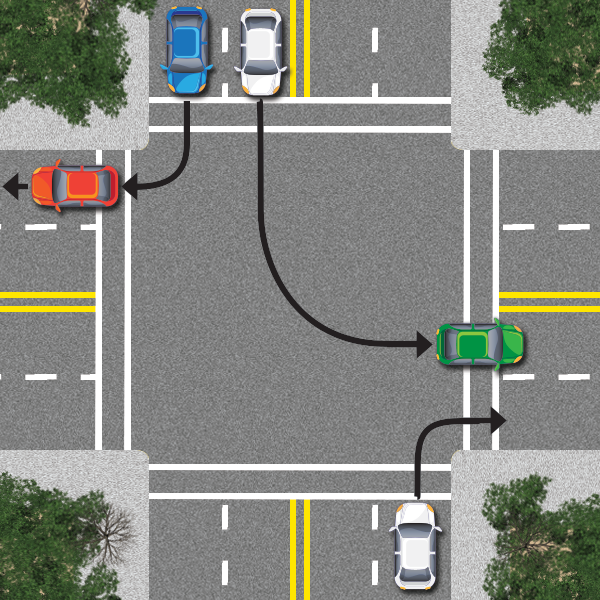
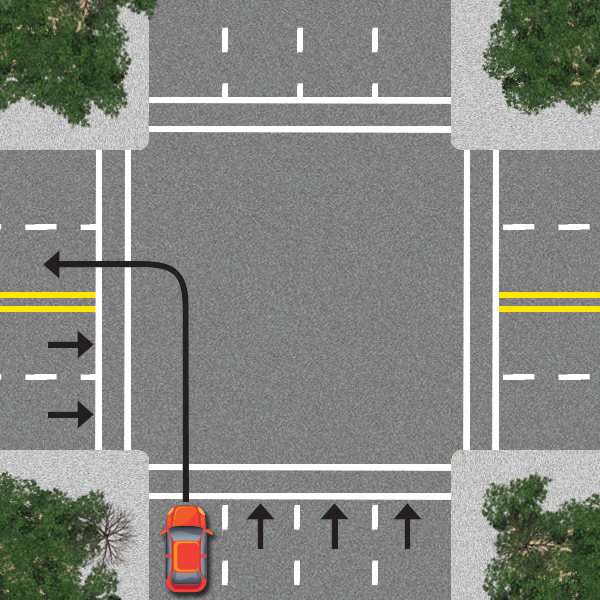
Left Turn, One-Way Road to One-Way Road: Approach in the traffic lane nearest the left curb. Turn into the nearest left lane for traffic on the road you are entering. You may make this turn against a red light after stopping and yielding to traffic and pedestrians.
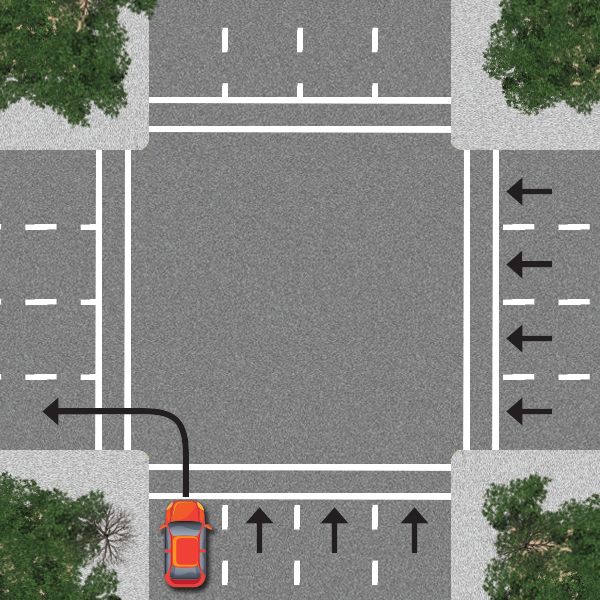
Left or Right Turn, Two-Way Road to One-Way Road: Approach in the traffic lane nearest to the direction of the turn. Turn into the nearest lane for traffic on the road you are entering. You may make this turn against a red light after stopping and yielding to traffic and pedestrians.
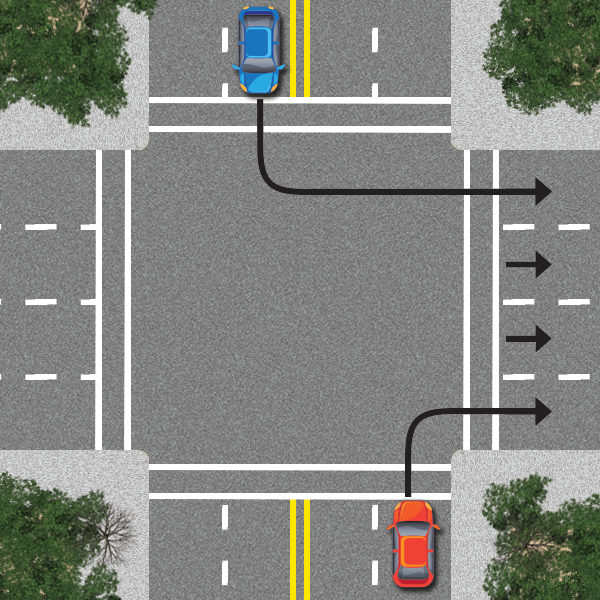
Left Turn, One-Way Road to Two-Way Road: Approach in the traffic lane nearest the left curb. Turn into the lane just to the right of the center line. You cannot make this turn against a red light.
Dual Turn Lanes and U-Turns
Multiple lanes may turn in the same direction at the same time when lane use control signs or pavement markings permit it. Follow the pavement markings and stay in your lane when turning onto roadways with more lanes than the lane you are turning from.
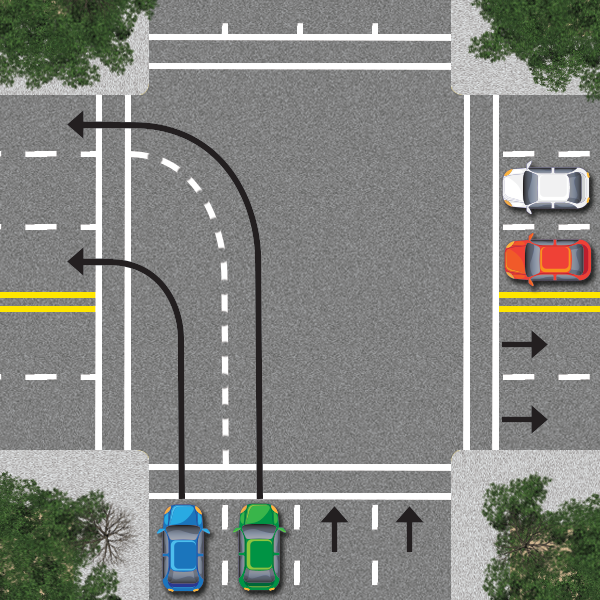
The general rule for turning is to turn from the nearest lane in the direction you are traveling to the nearest lane in the direction you want to go. Avoid swinging wide or changing lanes while turning.
U-turns are prohibited:
- At intersections controlled by a traffic signal, unless a sign permits it.
- Between intersections in a city.
- Within city limits, where your vehicle cannot be seen by traffic from either direction within 500 feet.
- Outside city limits, where your vehicle cannot be seen by traffic from either direction within 1,000 feet.
- At or on a railroad crossing.
- Anywhere U-turns are prohibited by official signs or markings.
Intersections
Stop signs, yield signs, and traffic signals control the flow of traffic at busy intersections. A defensive driver never assumes a stop sign or traffic signal will stop approaching traffic.
At an intersection with a stop sign, steady red signal, or flashing red signal, stop before the marked stop line or crosswalk. If there isn't one, stop before the unmarked crossing area. Always yield to pedestrians and people riding bicycles, as well as traffic already in the intersection, when making an allowed turn. Even with a green light, do not enter an intersection unless there is room for your vehicle on the other side.
At two-way stop signs across from each other, the driver turning left should yield to approaching or oncoming traffic going straight. At an intersection with no signs or signals, look left, then front, then right, and be prepared to stop, yielding to any vehicle already in the intersection or approaching from your right.
If you are on a road that ends at a "T" intersection with no signs or signals, you must yield to drivers on the through road.
Turn Signals, Turns & Intersections: Knowledge Check
5 questions. Answer them all, then check your answers. You can change your answers and try again as many times as you want.
1. You must use your turn signal at least how far before a turn or lane change in traffic?
2. On a two-way road approaching a left turn, you should position your vehicle:
3. At a four-way stop, if two vehicles arrive at the same time, you should:
4. U-turns are prohibited:
5. Before turning, you should check for bicyclists: