
Pedestrians & School Zones
Pedestrians are among the most vulnerable road users. Knowing exactly when you must stop keeps them, and you, safe.
Pedestrians
Drivers share the road with many other users. Pedestrians, bicyclists, motorcyclists, highway workers, and people using skateboards, scooters, or wheelchairs are all vulnerable road users. They can be hard to see and may not have protection against injury in a collision.
The term "pedestrian" refers to all people walking, as well as people rolling with skateboards, scooters, and wheelchairs. You must stop for pedestrians crossing the road at any marked or unmarked crosswalk. A pedestrian is crossing the road when any part or extension of the pedestrian, such as a cane, wheelchair, or bicycle, moves onto the road.
When You Must Stop
Stop and remain stopped for a pedestrian crossing in a crosswalk when the pedestrian is:
- In your lane of travel,
- In a lane next to your lane of travel, including a bike lane, or
- In the lane you are turning into.
If turning at an intersection with a traffic signal, the pedestrian must be six feet or more from the lane you are turning into before you begin the turn. If there's no signal, the pedestrian must be past the lane you are turning into, plus the next lane.
Crosswalks
There is a crosswalk at every intersection, even without painted lines. To find an unmarked crosswalk, imagine the sidewalk or shoulder at the corner extending to the other side. An unmarked crosswalk is at least six feet wide and exists even where there is no sidewalk or shoulder.
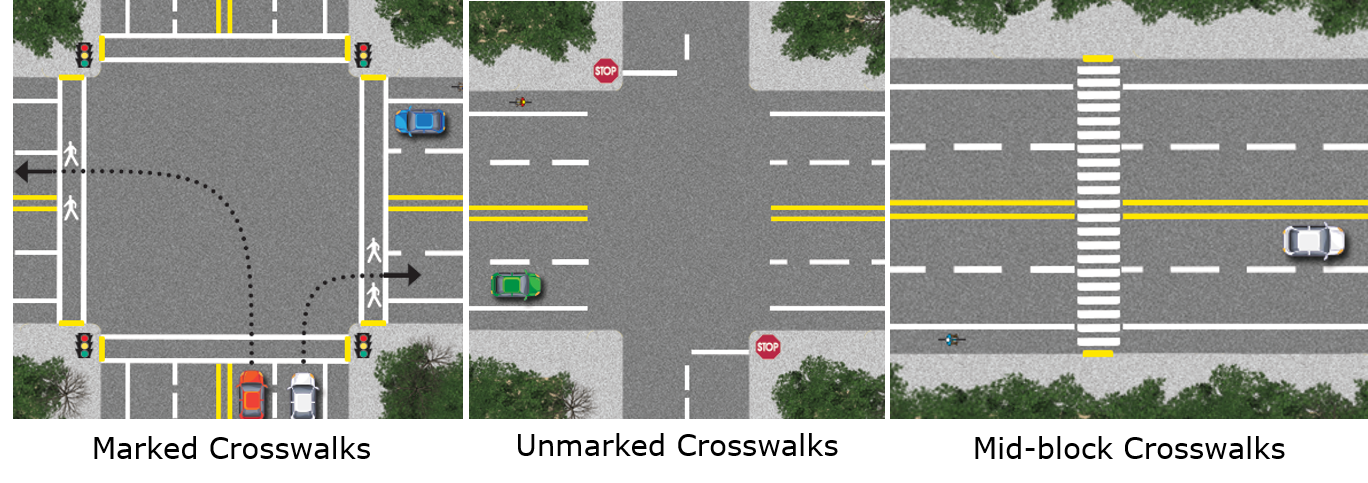
A mid-block crosswalk may have a flashing yellow light indicating a pedestrian is crossing, has finished crossing, or is about to cross.
Do not stop with any part of your vehicle overhanging the crosswalk area. This forces pedestrians to go around your vehicle and limits your visibility of people trying to cross.
If you cross a sidewalk, such as when entering or leaving a parking lot, alley, or driveway, stop before reaching the sidewalk and yield to pedestrians and bicyclists.
White Canes and Guide Dogs
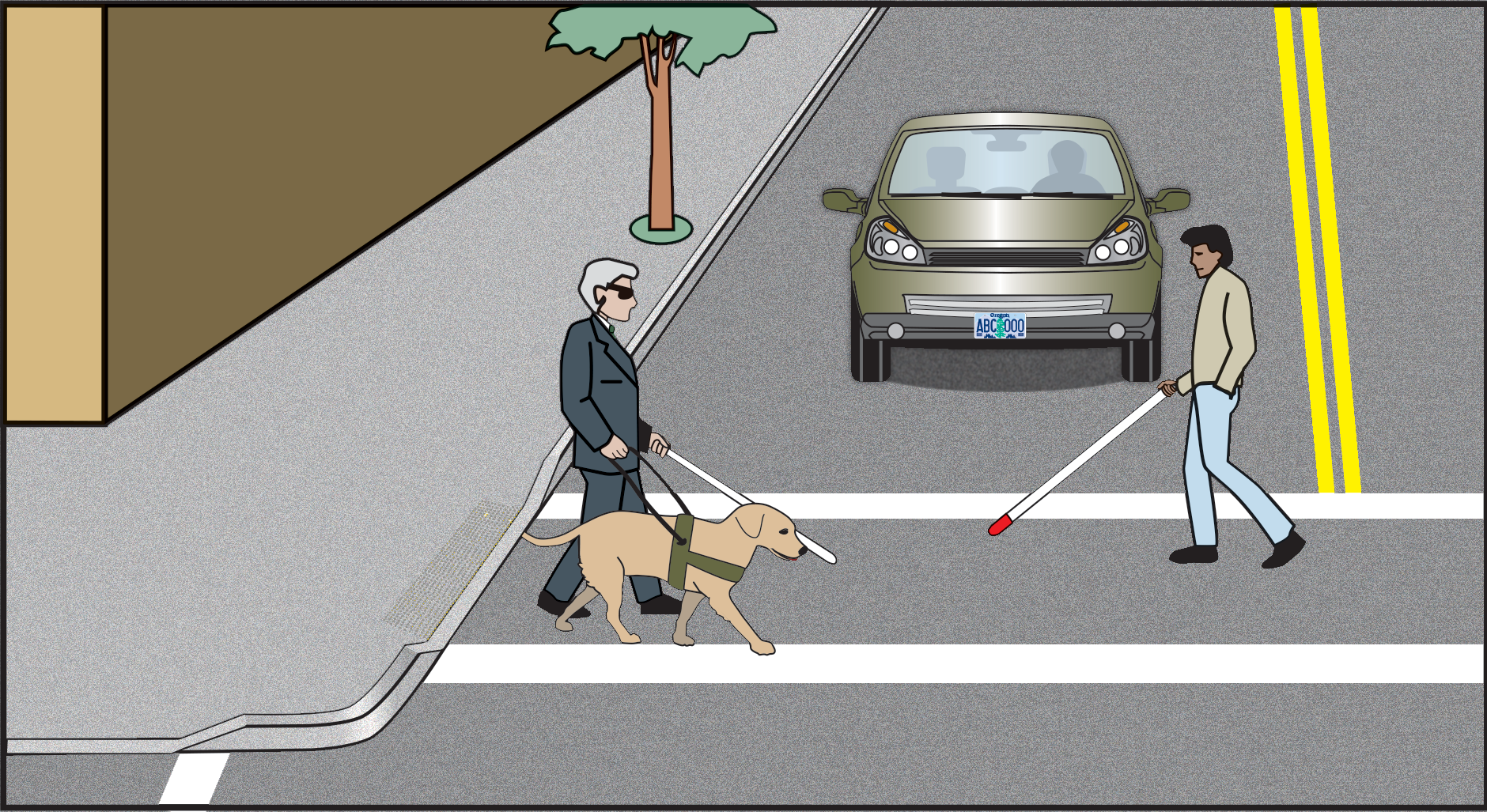
You must give the right of way to a pedestrian with limited vision, or any pedestrian who is blind or deaf-blind, carrying a white cane or using a guide dog. Stop if the person is about to cross or is crossing. Remain stopped until they have crossed the entire road, even if you have a green light.
Children at Play
Be extra careful in residential areas and places where children are likely to be, such as parks. Do not drive too close to parked cars that may block your view, and be watchful when backing in or out of a driveway. Children are unpredictable and may be playing or run behind your vehicle.
School Zones
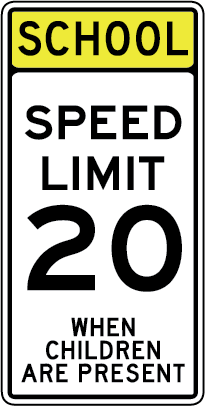
A school zone is a section of road next to a school or a school crosswalk, marked by signs. A school speed zone is an area with a reduced speed of 20 mph, defined by school speed signs. It begins at the SCHOOL SPEED LIMIT 20 sign and ends at the END SCHOOL ZONE sign or another posted speed sign.
School Zone Signs
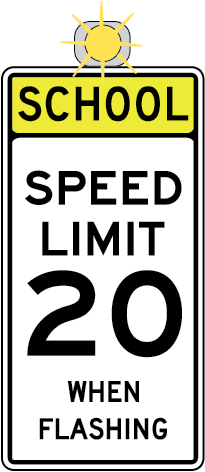
Flashing School Speed Limit Sign: Any time the yellow light on this sign is flashing, it means children are arriving at or leaving school.
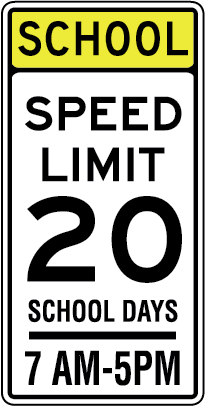
School Hours Speed Limit Sign: Applies between 7 a.m. and 5 p.m. on a school day. If you're unsure whether it's a school day, slow down to 20 mph.
Children Present Sign: Applies any day, any time children are present, meaning they are waiting at, occupying, or walking within a crosswalk, or a traffic patrol member is assisting them.
Pedestrians & School Zones: Knowledge Check
5 questions. Answer them all, then check your answers. You can change your answers and try again as many times as you want.
1. You must stop for a pedestrian in a crosswalk when they are:
2. A crosswalk exists at an intersection:
3. When you see a pedestrian using a white cane or guide dog crossing the road, you must:
4. A flashing yellow light on a school speed sign means:
5. The 'children present' school speed limit of 20 mph applies: