
Emergency Vehicles, Police Stops & Work Zones
These situations all require the same core response: slow down, move right, and give the people working or responding room to do their job safely.
Approaching Stopped Vehicles
If you are on a road with two or more lanes going the same direction and approach a vehicle stopped with lights flashing, you must change lanes so you do not drive next to it. You may also slow down by at least 5 mph under the posted speed limit. Allow the stopped vehicle as much room as safely possible.
When approaching emergency scenes, slow down and be prepared to stop. Do not drive over fire hoses unless told to do so by officials at the scene.
Emergency Vehicles
You must yield the right of way to emergency vehicles, such as fire trucks, police vehicles, and ambulances, when they approach from any direction using a light or siren.
After the emergency vehicle passes, you must stay at least 500 feet behind it.
Police Stops
If a police officer signals you to stop using flashing lights, a siren, or both:
- Drive as close as you safely can to the right side of the road, stop, and turn off the engine. Do not stop in an intersection or pull into the center median of a highway.
- Limit your movements and those of any passengers.
- Keep your hands on the steering wheel. Passengers should keep their hands in plain view.
- Show your driving privilege and/or vehicle registration only when requested.
- Stay in your vehicle. Do not get out unless requested.
- If it is dark, turn on the vehicle's interior light after stopping and before the officer approaches.
- Do not argue with the officer at the scene. Traffic violations and traffic crimes are decided in court.
Work Zones
Work zones are defined by orange traffic control devices. When entering one, be alert to changes in the roadway; workers and construction equipment may be close to traffic. Traffic fines are doubled in all work zones, and you are expected to yield to workers.
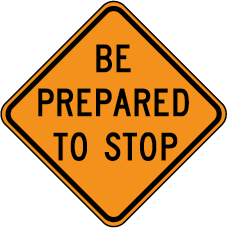
Work zones can change the flow of traffic. Expect to be guided by signs, cones, flaggers, lane markings, or other devices. Orange signs warn you what to expect ahead, orange cones guide you away from construction, and speed limits may be lower.
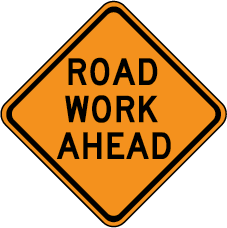
Flaggers and Freeway Work Zones
On two-lane roads, expect to be stopped by flaggers or automated devices in work zones. Flaggers use signs and hand signals to tell you which direction to travel, to slow down, or to stop. Automated flagger devices have the same duties, with red and yellow lights and a stop arm.
On freeways, expect to keep driving through the work zone, possibly with fewer, narrower, or new lanes, and merging with other traffic. You may drive very close to cones, workers, and equipment, so slow down and pay attention. Do not follow construction vehicles in a work zone; they may enter the road and cause slowing.
Emergency Vehicles, Police Stops & Work Zones: Knowledge Check
5 questions. Answer them all, then check your answers. You can change your answers and try again as many times as you want.
1. On a multi-lane road, if you approach a vehicle stopped with lights flashing, you should:
2. When an emergency vehicle approaches with lights or siren on, you must:
3. After an emergency vehicle passes you, you must stay how far behind it?
4. When stopped by police, you should:
5. At a work zone flagger station, a red light with the arm down means: