
Traffic Signals
Traffic signals control the right of way and keep traffic flowing smoothly. If a signal appears dark, such as during a power failure, treat the intersection as if there are stop signs in every direction.
Getting Started
To operate a motor vehicle on Oregon highways or public roads, you must have a valid driving privilege. This course covers the requirements for a Class C non-commercial driving privilege, which is the standard license most drivers get.
Every time you take a test, you must first pay the test fee and show proof of identity, date of birth, and your current residence address. You can take tests at most DMV offices. The test fee is separate from any other DMV fees.
Traffic Signal Basics
Traffic signals control the right of way and provide for a smooth, orderly flow of traffic. If a signal appears dark, such as during a power failure, you should stop as if there are stop signs in all directions. When a traffic signal is out of order and flashes yellow or red, you must obey that signal as defined below.
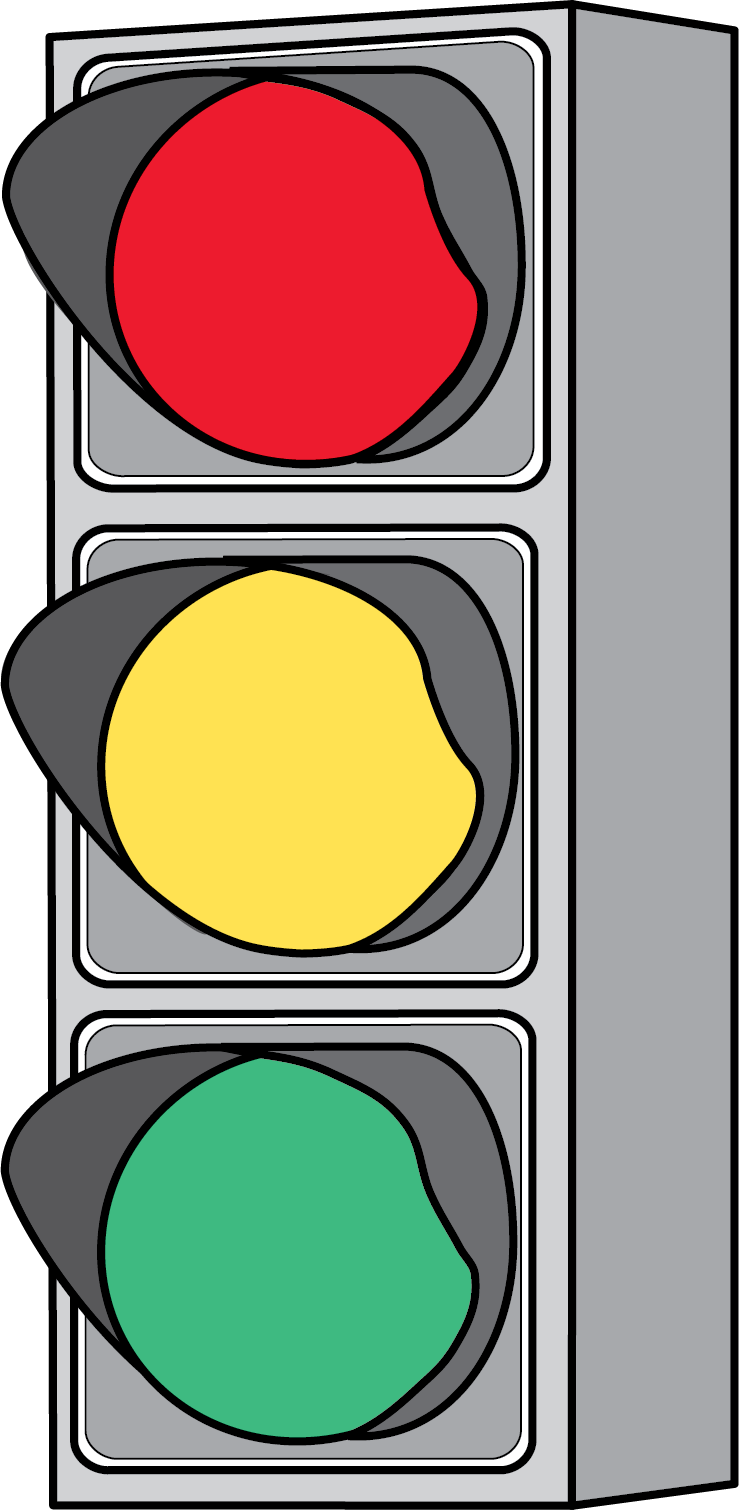
What Each Signal Means








Traffic Signals: Knowledge Check
5 questions. Answer them all, then check your answers. You can change your answers and try again as many times as you want.
1. A traffic signal is dark because of a power failure. What should you do?
2. A steady red arrow means:
3. A flashing yellow arrow means:
4. On a steady circular green signal, a left turn must:
5. A flashing red signal should be treated the same as: