
Speed Regulations & Pavement Markings
Drive on the right side of the road, follow posted and default speed limits, and obey the lines painted on the pavement. Together these rules keep traffic moving predictably.
Getting Started
To operate a motor vehicle on Oregon highways or public roads, you must have a valid driving privilege. This course covers the requirements for a Class C non-commercial driving privilege, which is the standard license most drivers get.
Every time you take a test, you must first pay the test fee and show proof of identity, date of birth, and your current residence address. You can take tests at most DMV offices. The test fee is separate from any other DMV fees.
Lane Travel Basics
Drive on the right side of the road except when:
- Passing another vehicle going in the same direction as you.
- Driving to the left of center to pass an obstruction.
- A road is marked for one-way traffic.
- A road has three marked lanes and the center lane is a passing lane.
- Directed by emergency personnel or other persons directing traffic.
When a road has no center line and traffic moves in opposite directions, drivers must give at least half the road to oncoming traffic.
If you must drive to the left of the center line to go around a road hazard or for any other reason, you must yield to oncoming traffic.
Change lanes only when you can do so safely. Avoid frequent lane changes.
Speed Limits
In addition to the basic rule, Oregon has maximum speed limits. A speed limit is the maximum speed considered safe for the area under ideal driving conditions. The following speed limits are set in law for the specified areas, whether posted or not. They apply unless a different speed is posted.
- 15 mph — When driving in alleys, and in narrow residential areas.
- 20 mph — In any business district, and within a school speed zone.
- 25 mph — In residential districts, in public parks, and on ocean shores where vehicles are permitted.
- 55 mph — On all roads and highways not meeting any other definition, unless otherwise posted.
Speed limits will vary on interstate highways.
Variable Speed Signs
Digital speed signs have replaced some standard speed signs in Oregon. They use road, weather, traffic, and visibility sensors to lower the speed limit when conditions require drivers to slow down. There are two types.
Variable Advisory Speed: Yellow signs that say "advisory speed." These recommend a speed based on conditions like heavy traffic, poor weather, or a slippery road. They are not speed limits, but police may enforce them through the basic rule law.
Variable Speed Limit: Black and white signs that say "speed limit." These change the actual speed limit based on conditions. Police may enforce these like any other speed limit sign.
Slow Drivers and Racing
If you drive slower than the normal speed of traffic, you must use the right lane or drive as closely as possible to the right curb or edge of the road, unless you are preparing to make a left turn. Watch for congestion behind you, and pull off at the first safe area to let traffic pass.
It is illegal to race on any road. Racing can be any acceleration or speed contest, or the making of a speed record.
Why speed matters for pedestrian safety: The risk of death for a pedestrian hit by a vehicle rises sharply with speed.
Source: FHWA, adapted from the USDOT Pedestrian Safety Action Plan.
Yellow Pavement Markings
Oregon's pavement markings follow national standards. You must obey all pavement markings unless a police officer or road worker is redirecting traffic. Yellow markings separate traffic moving in opposite directions and mark the left edge of one-way roads, ramps, two-way left turn lanes, and painted medians.
Solid yellow line: Marks the left edge of one-way roads and ramps.
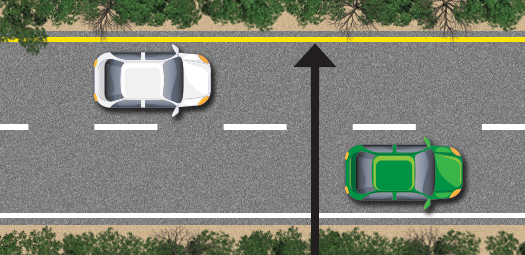
Broken yellow center line: Indicates a two-way road used for traffic traveling in opposite directions. Passing is allowed for both directions of travel.
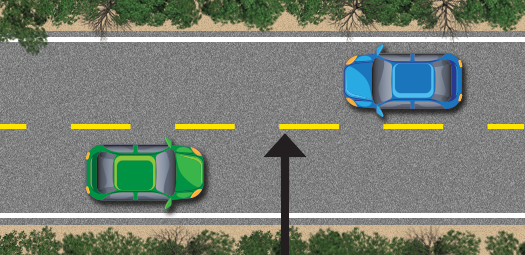
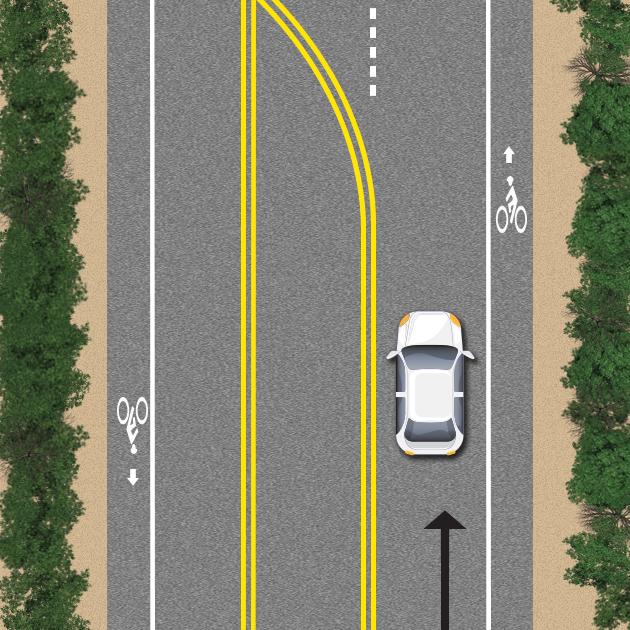
Double center line (solid and broken yellow): Indicates where passing is allowed. A broken yellow line on your side of the lane means you may pass. A solid yellow line on your side means you may not pass.
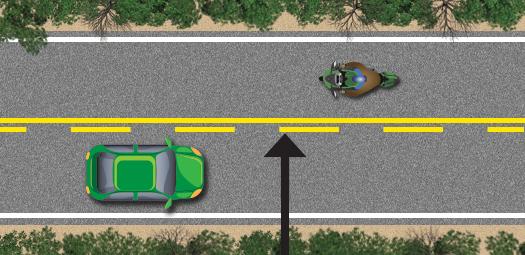
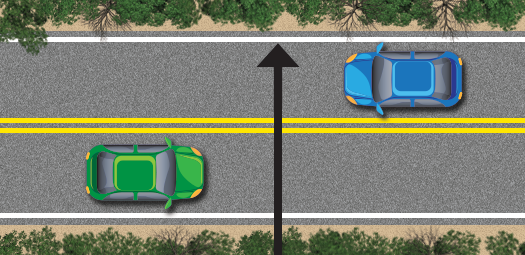
Double solid yellow line: Passing is not allowed for both directions of traffic. You may turn left, to enter or exit a roadway, across double solid yellow lines after waiting for oncoming traffic to clear.
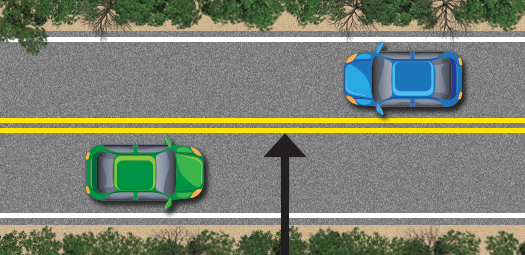
Two-way special left turn lane: Do not make a left turn from any other lane. It is illegal to travel in this lane, so enter it just before your turn and wait until traffic clears.
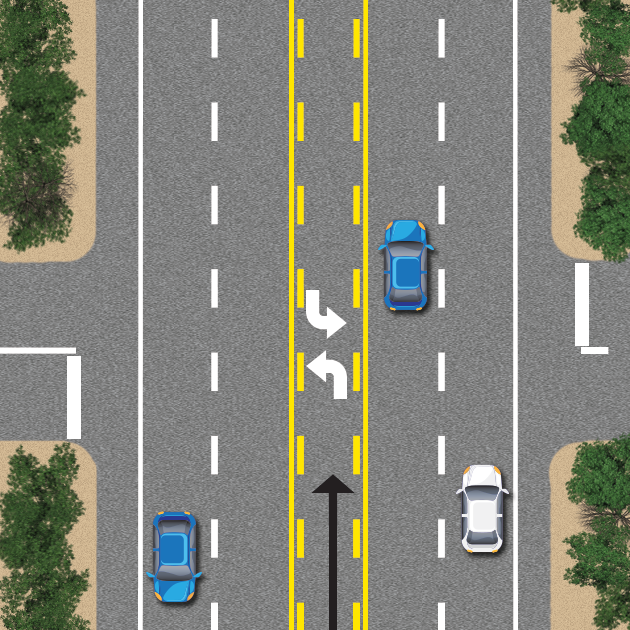
Painted median with double solid yellow lines: Marks the area between two directions of travel. You may turn left across it after waiting for oncoming traffic to clear, but may not use it as a turn lane or travel lane.
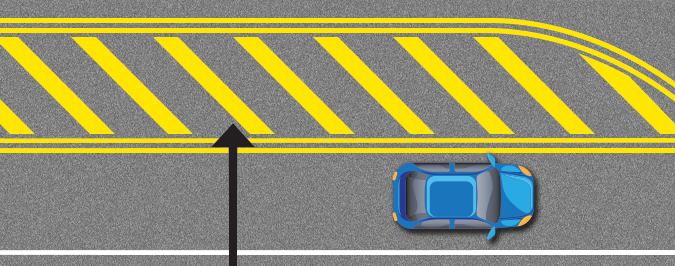
Yellow diagonal stripes: Used within a painted median to show fixed objects ahead or areas where vehicle use is not allowed. It is illegal to drive in or turn across these stripes.
White Pavement Markings
White markings separate lanes of traffic flowing in the same direction and mark the right edge of travel lanes. They are also used for crosswalks, stop lines, symbols, and words.
Solid white line: Used for an edge or fog line to help drivers stay on the road.
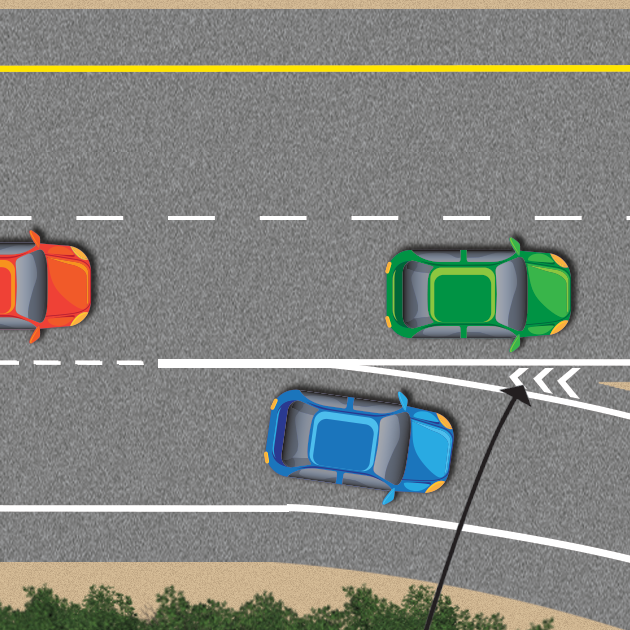
Wide solid white line: Directs traffic into specific lanes, such as turn lanes, and separates bike lanes from other traffic. Crossing it is permitted but discouraged.
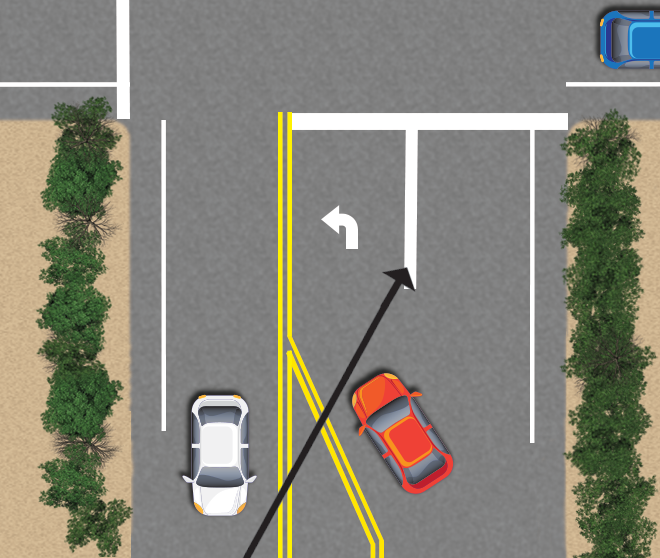
Broken white line: Separates lanes of traffic going in the same direction. Crossing is permitted with caution.
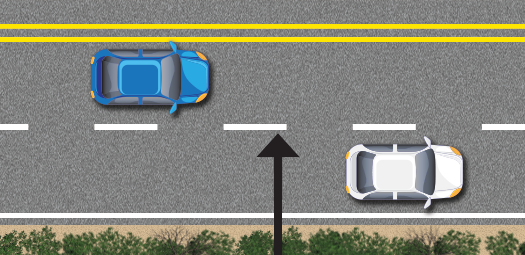
Dotted white line: Placed closer together than a broken line. Used before an exit ramp or intersection to show the lane will not continue on the same route, at a freeway entrance to show you must merge, or within an intersection to guide you into the proper lane.
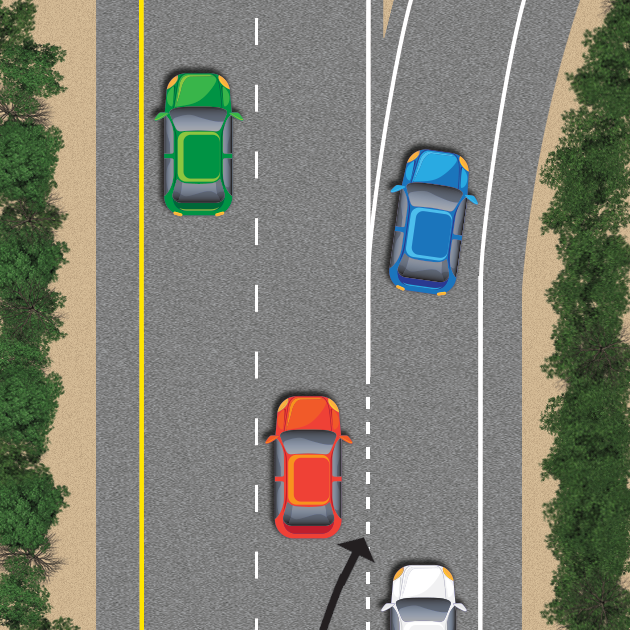
Double solid white line: Usually paired with a sign prohibiting lane changes for a certain distance. Stay in your lane.
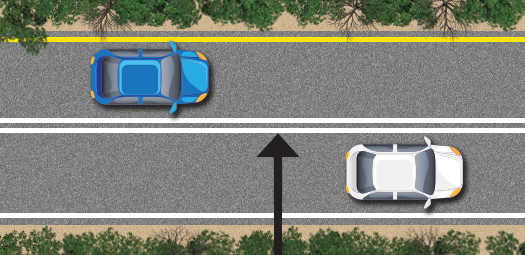
Marked crosswalk: White lines marking where pedestrians cross the road. Stop when a pedestrian is in the crosswalk.
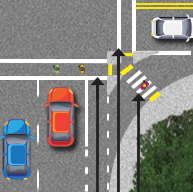
Stop line: A solid white line across your lane showing the point where you are required to stop.
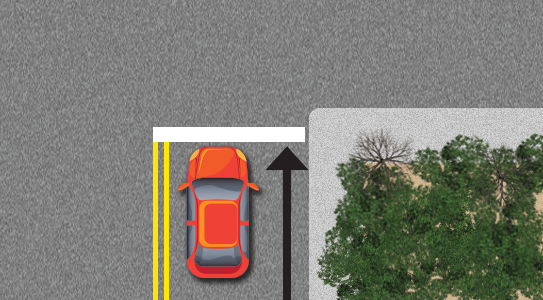
Bike lane: Identified by a wide white line with a bicycle symbol or a bike lane sign. Bike lanes may be painted green.
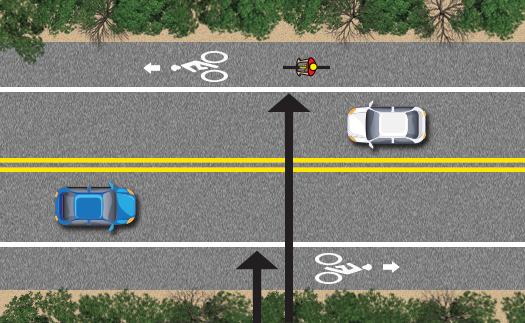
Yield line: A row of triangles in your lane, pointing toward your vehicle, showing the point where you are required to yield.
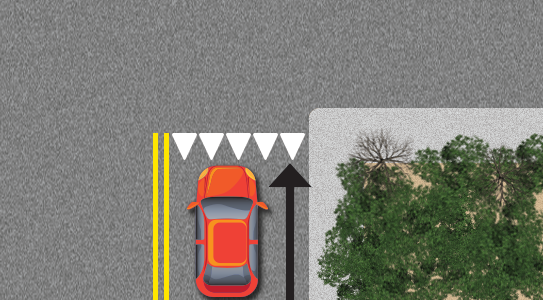
White chevrons: May be used to show fixed objects in the road ahead or other areas where vehicle use is not allowed.
Red Pavement Markings
Red markings designate where transit-only vehicles, like buses, light rail trains, or bikes, may travel continuously. Not all Transit Only lanes are red, so always look for signs or other markings on the road too.
Solid red lane: A Transit Only lane, not for cars. May also say "BUS ONLY," "BUS BIKE ONLY," or "LRT."
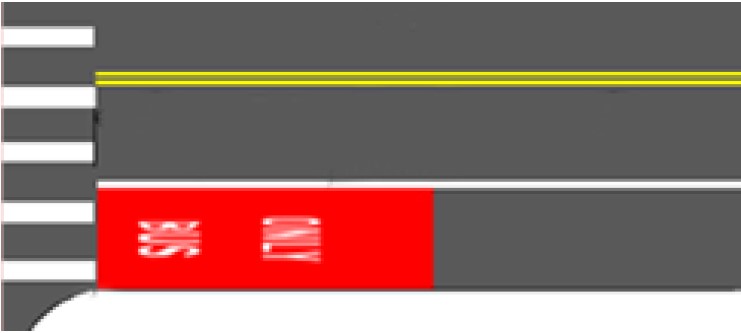
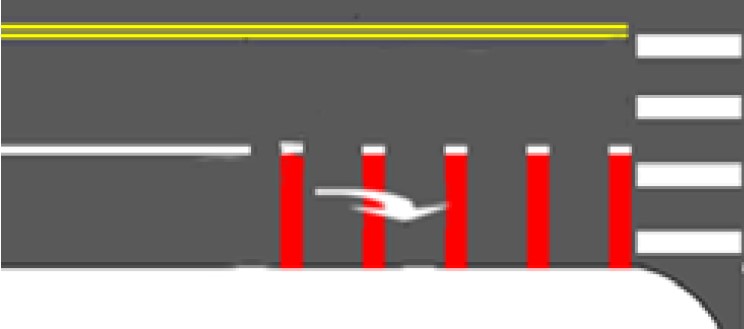
Striped red lines: Show where you may enter the Transit Only lane to turn, park, or enter a driveway.
Speed Regulations & Pavement Markings: Knowledge Check
5 questions. Answer them all, then check your answers. You can change your answers and try again as many times as you want.
1. What is the default speed limit in a residential district?
2. The basic rule means you must drive at a speed that is reasonable and cautious for conditions. This means:
3. A broken yellow center line means:
4. A row of white triangles pointing toward your vehicle in your lane is called a:
5. A solid red lane on the road means: